Friday, 17 April 2020

COVID19 List - Day 24

Late additions

242. Wild Carrot Daucus carota - much debate has been had with a variety of botanists online concerning the identity of this 'weed' on my drive. I initially thought it might be Swinecress, but that's only a very superficial likeness (botanical equivalent of muddling up bees and flies I suppose!) Anyway, it turns out that I have a nice Wild Carrot growing here. The rest of the family have been instructed not to uproot it.


Friday 10th April 2020

243. Swallow Hirundo rustica - always a pleasure when these return; several pairs around the village but they don't nest on our own property.

244. Sloe Bug Dolycoris baccarum - a distinctive shield bug, common in the garden each year.


245. Woundwort Shieldbug Eysarcoris venustissimus - another common bug, slightly smaller, that seems to hang out on White Dead-nettle before the woundwort gets going in our garden. Here's a photo from a previous year.


246. [A sawfly] Ardis pallipes - a non-descript dark sawfly with pale legs, laying its eggs into the stem of a garden rose. Required close examination to confirm this - only the third county record of this species (I found the previous two about 5 miles away last year).


247. [A sawfly] Pristiphora armata - a small sawfly that is proving to be common around hawthorns in spring. Quite distinctive when you get your eye in - I don't have a photo yet.

248. [A parasitic wasp] Ichneumon stramentor - a striking wasp, most ichneumonids are not safely identifiable from photos but this is one of the rare exceptions. This will have been hunting for moth caterpillars to lay its eggs in.


249. Gooden's Nomad Bee Nomada goodeniana - a common "cuckoo-bee", one of several similar species but the only one with complete yellow bands on the abdomen.


250. 14-spot Ladybird Propylea quattuordecimpunctata - first one of these I've ever noticed in the garden, very distinctive

251. [A cranefly] Limonia nubeculosa - a common and distinctive cranefly, on the kitchen window


252. Marmalade Hoverfly Episyrphus balteatus - one of the commonest hoverflies in Britain each year.


253. Common Snout-hoverfly Rhingia campestris - distinctive long-"nosed" hoverfly

254. White-lipped Snail Cepaea hortensis - one found in the ruins of the destroyed shed that we're clearing to dig a pond in its place.


Thursday, 16 April 2020

COVID19 List - Days 20 to 23

Late additions

227. Common Mini-mining Bee Andrena minutula - very small bee found in back garden on 4th April, took a little while to identify with certainty

228. Fabricius' Nomad Bee Nomada fabriciana - another small bee, in garden on 5th April, more striking but still a few lookalikes that needed ruling out

229. [A hoverfly] Meliscaeva auricollis - a common early-spring hoverfly, one was caught in the garden on 5th April


Monday 6th April 2020

230. Hairy-templed Thatcher Demetrias atricapillus - one of the most distinctive ground beetles, which also has a most excellent English name.

231. Varied Carpet Beetle Anthrenus verbasci - one of the boys found one in their room. Never the most welcome of house guests but very attractive.


Tuesday 7th April 2020

232. House Martin Delichon urbicum - one of the main signs of spring at our house, as we're lucky enough to have between one and three nests on the house each year. Most years I probably miss their exact time of return, but given that I'm at home every day now, I'm pretty certain that the one I noticed outside (whilst taking part in a work video-conference) had indeed just got back from Africa.

233. Sallow Button Acleris hastiana - one of the many species of tortrix moth, hastiana is a reasonably distinctive species that over-winters as an adult and consequently can look a bit worn by this time of year. In the light-trap overnight.


Wednesday 8th April 2020

Saw several nice things around the village today but no new garden ticks.


Thursday 9th April 2020

234. Cinnamon Bug Corizus hyoscyami - a very distinctive bug that's been extending its range in recent years and is now quite common around the village.


235. Chocolate Mining Bee Andrena scotica - one of the larger members of the genus, this species seems to have a tendency to wander into the house each spring and get stuck inside the windows.

236. German Wasp Vespula germanica - a queen caught in the garden and examined closely. German and Common Wasps are (roughly) equally numerous and need close checking. Queens aren't too difficult, males are harder to separate.

237. [A hoverfly] Epistrophe eligans - another common spring-flying hoverfly.


238. Brindled Beauty Lycia hirtaria - large furry looking moth that's regular here in April each year.


239. Red Chestnut Cerastis rubricosa - fairly distinctive medium-sized moth in the light-trap each spring.


240. Great Prominent Peridea anceps - a great find in the light-trap, the first I've ever seen in the garden (and only my third anywhere). This big moth is quite widespread in Norfolk but the map of records on the excellent Norfolk Moths website shows it to be absent in the south-east of the county. This is the first record for the whole 10km square of TM29.


241. Emperor Moth Saturnia pavonia - a really striking moth, one of the largest that occur in the UK. This female was clearly attracted by the light-trap but I failed to spot it when checking it in the morning. Trudy noticed it when weeding nearby later in the day. My third garden record after previous occurrences in 2011 and 2015.


Saturday, 11 April 2020

COVID19 List - Day 19

Sunday 5th April 2020

204. Pine Ladybird Exochomus quadripustulatus - one found in the greenhouse

205. Skylark Alauda arvensis - heard singing from fields nearby

206. Common Mourning Bee Melecta albifrons - one buzzing around flowers on the drive, with a pollen-stained head like this one I photograped at the Nunnery a few weeks ago


207. Red Mason Bee Osmia bicornis - first one seen along the verge. This species breeds in our 'bee-hotel' but not seen any emerge yet.

208. [A sawfly] Cladius compressicornis - one female swept from ivy (below a hawthorn - the larval foodplant) on the drive. An all-black sawfly, fairly small with typically fast-flickering antennae. With experience, this is an easy genus to identify, but getting to species-level requires closer examination.

209. [A plant bug] Liocoris tripustulatus - common bug found around nettles.

210. [A weevil] Apion frumentarium - found on the front verge, one of a distinctive small group of red weevils, although determining which requires close examination. This species feeds on docks.

211. Wall Speedwell Veronica arvensis - a small plant on the front verge


212. Birch Catkin Bug Kleidocerys resedae - a small but distinctive bug, found wherever birches (and alder) occur.

213. [A centipede] Julus scandinavius - found under a log.

214. Thale Cress Arabidopsis thaliana - common, but just one plant found on the front verge

215. [A fly] Bibio johannis - common species at this time of year, close examination required to rule out other Bibio species.

216. Great Spotted Woodpecker Dendrocopos major - belated addition to the COVID list, one calling from next door.

217. Barnacle Goose Branta leucopsis - two flew over late afternoon, first picked up on call. These will be from the naturalised population in East Anglia, with previous evidence linking birds in Shotesham in summer to those found at Buckenham Marshes in winter.

218. [A lichen] Xanthoria parietina - very common lichen in most environments, noted here on front hedge


219. Lilac Syringa vulgaris - self-seeding in the front hedge


220. [A ground bug] Taphropeltus contractus - found whilst weeding

221. Early Thorn Selenia dentaria - moth-trap tonight, a common species

222. Double-striped Pug Gymnoscelis rufifasciata - one in the moth-trap


223. Powdered Quaker Orthosia gracilis - less numerous than some of the other earlier-flying Orthosia species, but regular in April here


224. Early Grey Xylocampa areola - another common moth-trap species in spring


225. Common Plume Emmelina monodactyla - very common micro-moth species anywhere that bindweed occurs


226. Scarce Alder Slender Caloptilia falconipennella - an occasional spring visitor to the moth-trap


Friday, 10 April 2020

COVID19 List - day 18

Saturday 4th April

191. Little Owl Athene noctua - one was calling nearby about 0500 (I was woken by the dog)

192. Fieldfare Turdus pilaris - two calling from trees in the back of the garden, pleasing to get after there had been hundreds nearby for weeks but I thought they'd now all gone for the summer.

193. [A weevil] - Liophloeus tessulatus - a fairly large weevil found in the back garden


194. "Torpedo Sawfly" Nematus lucidus - netted along the drive. This is a common sawfly around hawthorns and similar shrubs. With practice, it is also a distinctive species that does not need to be retained for microscopic examination.


195. [A ground bug] Lygus pratensis - a difficult genus but this seemed to key correctly.

196. [A leaf beetle] Bruchus rufimanus - distinctive beetle, keyed to rule out a few similar species. Feeds on broad bean crops.


197. [A leaf beetle] Longitarsus jacobaeae - small orange beetle, found whilst weeding. Required very close examination to confirm species.

198. [A dung beetle] Aphodius prodromus - a common species in spring, this one found whilst weeding.

199. Primrose Primula vulgaris - a single plant in the back garden

200. Orange-tip Anthocharis cardamines - a welcome sign of spring, the males being particularly noticeable. Eggs are laid on Garlic Mustard and Honesty.

201. Brimstone Gonepteryx rhamni - another classic spring butterfly. Doesn't breed in the garden as we don't have any buckthorn or alder buckthorn.

202. [A centipede] Lithobius forficatus - a very common large centipede, this one found under a log

203. Common Pill Woodlouse Armadillidium vulgare - very common woodlouse, able to roll itself into a ball. Found under a log.


Monday, 6 April 2020

COVID19 List - days 13 to 17

Monday 30th March 2020

173. Cormorant Phalacrocorax carbo - one flew over as I left the house for the morning dog-walk. Only my second record from the garden, so a lucky one to add.

174. Carrion Crow Corvus corone - overlooked until now

175. Common Flower Bug Anthocoris nemorum - very common bug encountered in the front garden

176. [A leaf beetle] Oulema duftschmidi - striking small colourful beetle, found resting on the front door. This species requires the most minute examination to rule out the similar O. melanopus.


177. [A hoverfly] Melanostoma scalare - a common small hoverfly with black face, yellow abdomen spots, long abdominal segments.


Tuesday 31st March 2020

178. Rabbit Oryctolagus cuniculus - seen on the common from the house. My own rules allow birds and mammals seen 'from' the garden (not just in it) so on this goes. Additionally, the cat has brought several back recently also...

179. Herring Gull Larus argentatus - a pair flew along the common this morning

180. Rook Corvus frugilegus - realised I could see/hear birds nesting 500m down the common.

181. Magpie Pica pica - another belated addition of a very obvious species.


Wednesday 1st April 2020

182. Nuthatch Sitta europaea - a very surprising sighting of one hopping around on our patio whilst I was doing a video-chat with a colleague. They are resident at the other end of the village where the trees are older, but pretty scarce with us.


Thursday 2nd April 2020

183. Sticky Mouse-ear Cerastium glomeratum - a common but easily overlooked roadside plant, this on the verge


184. Common Chickweed Stellaria media - another extremely common small plant, with notable single row of hairs along the stem.


185. [A leaf beetle] Longitarsus dorsalis - tiny beetle snapped on the front verge and identified with pointers from others online. Several more seen in back garden a few days later. Should be sought under ragwort leaves.


186. [A leaf-mining fly] Cerodontha iridis - mines made by the larvae of this fly are often very evident in the leaves of Stinking Iris, as in the garden at the moment.


187. [A tick] Ixodes ricinus - taken from the cat's ear, fully keyed

188. Sexton Beetle Nicrophorus humator - large black beetle found (as usual) at moth-trap light tonight.


Friday 3rd April 2020

189. Blackcap Sylvia atricapilla - first one back in the garden this spring, this species will now be a major component of garden birdsong for months. Suspected to nest most years.

190. Brindled Flat-body Agonopterix arenella - a common over-wintering moth, often found at lit windows (as tonight) or disturbed from our log pile.


Thursday, 2 April 2020

COVID19 List - day 12

Sunday 29th March 2020

Disappointingly cold today. I did venture down to the wilds of the roadside verge, but my pics were so poor in the dull weather that I had to make a return trip a few days later to get some better ones (that I've slotted in below where possible). Quite a few plants still unidentified too, which I will try to remember to return to over coming weeks. I also had a quick look under one of the logs in the woodshed, which I've been procrastinating about - lots to find in there but just a few added today.

158. Annual Meadow-grass Poa annua - I've keyed small grasses of this ilk before around the garden at this time of year and they always turn out to be this. Looks superficially the same at least, so we'll have it.


159. Creeping Cinquefoil Potentilla reptans - very common on some road verges around here, although easily overlooked. Worth checking later for the leafmine of the sawfly Fenella nigrita


160. Dove's-foot Cranesbill Geranium molle - a common small flower along roadsides, very similar to Small-flowered Cranesbill but with up to 10 anthers on the stamens (not just 5) and distinctively haired stems.


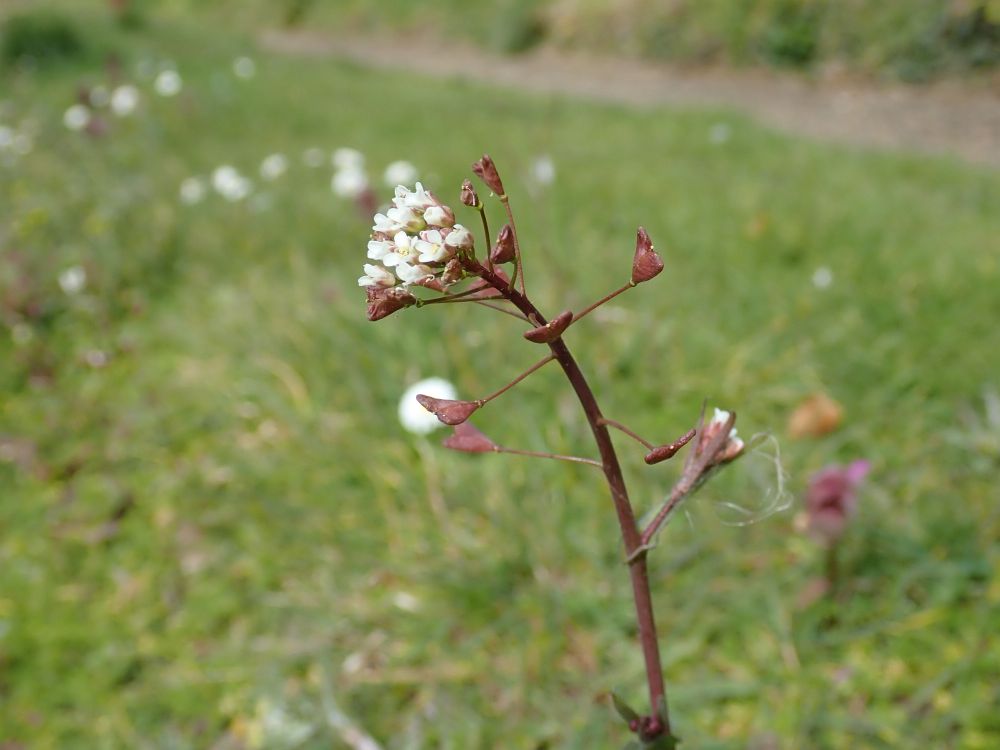
161. Shepherd's-purse Capsella bursa-pastoris - very common in weedy places, best identified by its fruits as the form of the plant itself can be really variable


162. Ribwort Plantain Plantago lanceolata - one of the most widespread plants in the world I believe, and it's here in the garden too.


163. Daisy Bellis perennis - one of the most widely recognised wild flowers in Britain surely


164. Spear Thistle Cirsium vulgare - a very widespread plant in Norfolk, still just in leaf here

165. Cherry Plum Prunus cerasifera - another of those "probably shouldn't list it", presumably planted deliberately as part of the hedge at some point. But well-established and feels sort-of wild. Cherry Plum is closely related to Blackthorn but the flowers come out a tad earlier, and at the same time as the leaves start appearing. Blackthorn has the flowers first, leaves later.


166. "Elder Aphid" Aphis sambuci - I found this mass of black aphids on an elder along the drive. Of the elder-specific aphids, this is the black one. I understand that it's possible it could be a polyphagous species also in theory? I've keyed this species more carefully previously around here, so it does seem likely.


167. White Stonecrop Sedum album - growing on a pebbly bit of the drive. The main concentration of this in the garden is on the flat roof above the front door where it grows below a House Martin nest, and I assume the droppings make quite a hostile environment for other plants.


168. [A ground beetle] Platyderus depressus - on the face of it, quite a non-descript medium sized carabid beetle, but I've keyed this around the house several times before and recognise it these days. Brown, with a slightly foreward-projecting centre to the pronotum.

169. Strawberry Snail Trochulus striolatus - on the wall by the woodpile. I do find snails annoyingly difficult to feel confident about, but think this is common in the garden.

170. Common Cryptops Cryptops hortensis - a centipede with 21 pairs of legs, which helps narrow it down to just a handful of species.

171. White-legged Snake Millipede Tachypodoiulus niger - the common largeish black millipede with contrastingly pale legs.

172. Common Striped Woodlouse Philoscia muscorum - one of the five common woodlice that can be found in most locations


Monday, 30 March 2020

COVID19 List - day 11

Saturday 28th March 2020

The weekend again, so I was able to get out and about a bit more...within reason.

137. Tutsan Rust Melampsora hypericorum - Rob Yaxley found this on leaves of Tutsan in his garden, so I popped out of the back door and found it on ours too.


138. Oregon-grape Mahonia aquifolium - a commonly planted shrub, this is self-seeding in parts of the garden.


139. Mahonia Rust Cumminsiella mirabilissima - I was alerted to this fungus last year by James Emerson. Easily found on Mahonia it would appear.


140. Creeping Thistle Cirsium arvense - common plant in the garden (the most widespread plant species in Norfolk in fact)


141. [A leaf-mining fly] Phytomyza hellebori - the leaves of this Stinking Hellebore have been supporting a small population of this fly since at least 2013 (when I first noticed it). Fly larvae live within the thickness of the leaf, largely protected from predators. Note that there's a black fungus on here too, which we haven't yet identified.


142. Sycamore Acer pseudoplatanus - new sapling poking up near the vegetable patch. There's a lot of talk about planting trees; it's not always necessary, they're quite good at it themselves.


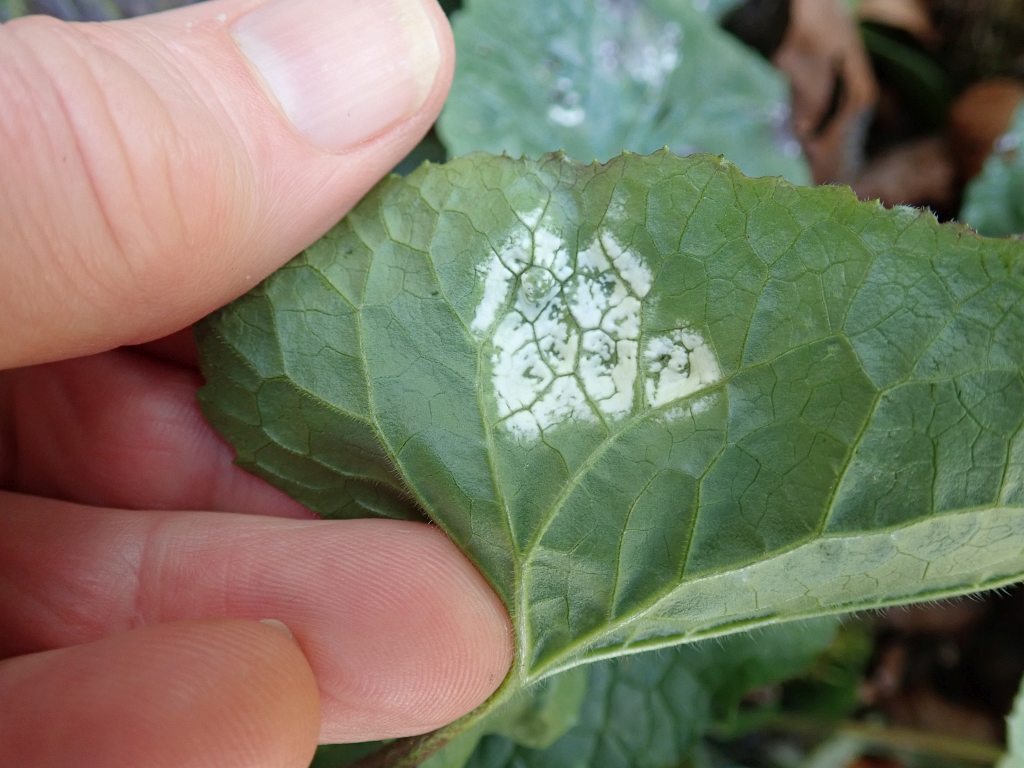
143. White Rust Albugo candida - found on the underside of leaves of Honesty by the front door (the upperside quite discoloured too). This is quite an interesting species, as although it looks superficially like a fungus, it isn't - it's in an entirely separate kingdom. Different scientists differ on what this kingdom should be called (Protista, Chromista, ??) Anyway, it occurs on a range of different cruciferous plants - might prove to be a range of different species with further investigations.


144. Hop Humulus lupulus - a very common creeper around the garden, tiresomely creeping over everything else as the summer progresses. I don't see it widely elsewhere in the village - presumably someone in the past cultivated it here. Jo Parmenter mentioned that the shoots at this time of year are edible, which I can now confirm.


145. Broad-leaved Dock Rumex obtusifolius - common weed in the garden 


146. Garlic Mustard Alliaria petiolata - no flowers yet but several plants apparent around the front garden, another foodplant (with Honesty) for Orange-tip butterflies


147. Garden Grape-hyacinth Muscari armeniacum - spreads readily around the garden, favoured by small bees and bee-flies.

148. [A leaf-spot fungus] Boeremia (Phoma) hedericola - another tip-off from Rob Yaxley, this was found on an ivy leaf in a shady part of the garden


149. Snowberry Symphoricarpos albus - part of our hedge but spreading under its own steam.


150. Stinking Iris Iris foetidissima - several plants have established themselves around the garden in recent years (or at least, I've noticed them in recent years)


151. Holly Leaf-miner Phytomyza ilicis - a very widespread leaf-mining fly whose mines can almost always been found on wild Holly; it's pickier on garden plants it seems.


152. Silver Birch Betula pendula - we have a couple of tall trees. Suspect they may initially have been planted as there's not a huge amount of birch in the village, but it is of course a common native tree.

153. Ragwort Senecio jacobaea - leaves noticed in the back garde whilst weeding

154. Dunnock Prunella modularis - had forgotten to add this previously, common garden resident

155. Linnet Linaria cannabina - a flock of about 30 landed in a tree just over the road briefly. There's been a big flock up the road all winter, but they're now separating out into pairs and smaller groups.

156. Nursery Web Spider Pisaura mirabilis - two seen sun-basking, very common spider

157. Black Garden Ant Lasius niger - common in the garden. There are some very similar species but I checked a couple very closely, in particular to rule out L. platythorax.